Year
Results
Cognitive Warfare to Dominate and Redefine Adversary Realities: Implications for U.S. Special Operations Forces
The battlefield of the future is the human mind, and the very concepts of reality and truth are the target. Cognitive warfare goes far beyond traditional psychological operations; this new form of conflict combines cyber tools, psychological sciences, and neurosciences to alter perceptions and influence decision-making. In this occasional paper, Dr. Jeremiah Lumbaca argues that the U.S. is not yet prepared to face its adversaries using cognitive warfare tactics and proposes a way SOF can evolve to win in this new domain of conflict.
Access as a web page by clicking here or on the image below.
|
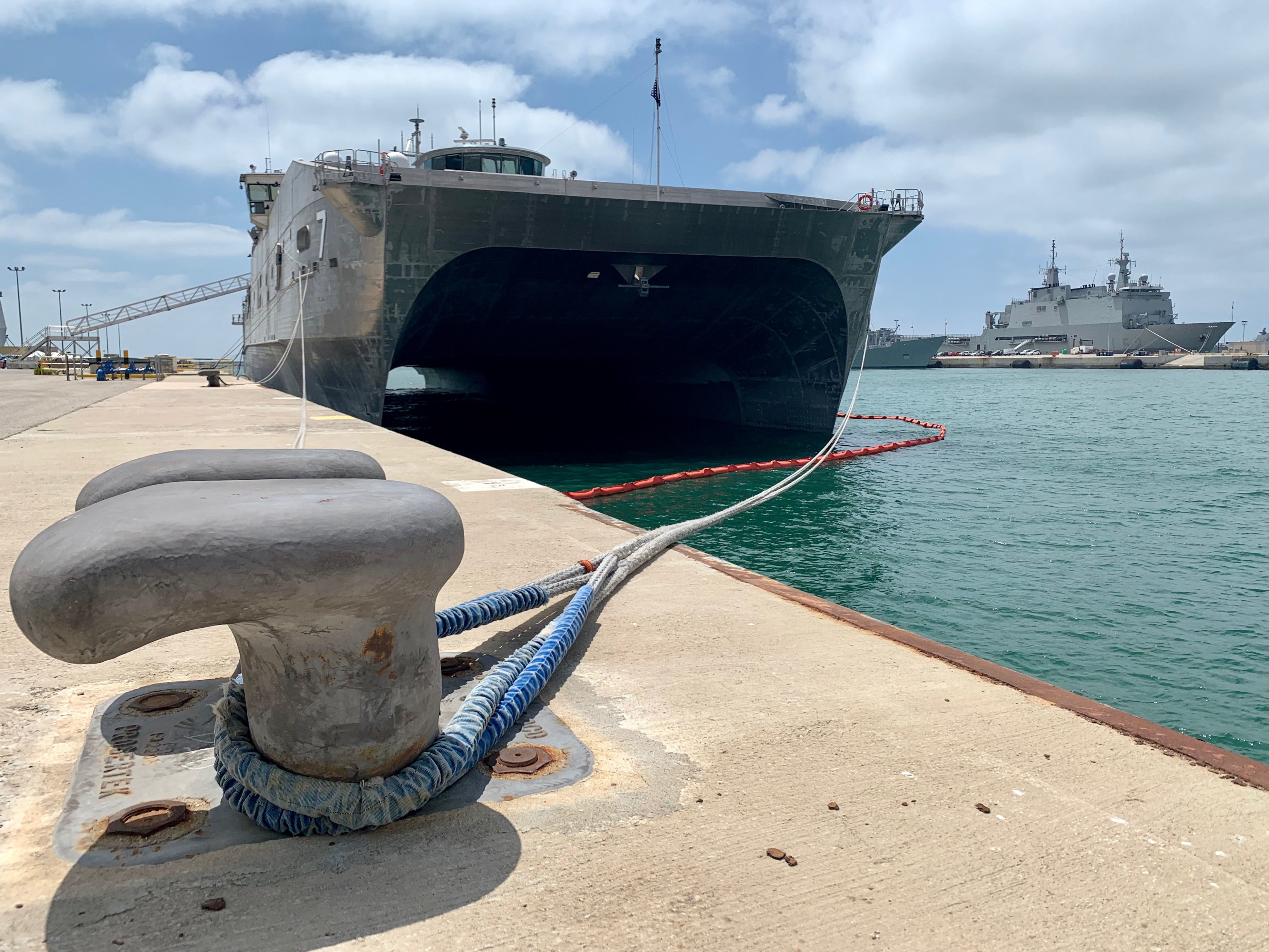
The Gulf of Guinea: A Primer
In this Quick Look, JSOU professor Christiane Thompson introduces readers to the Gulf of Guinea (GoG), provides a brief overview of the struggles faced by the area, and discusses SOF's role in developing the GoG's defenses.
This is part one of a two-part series. For more information, check out upcoming JSOU Report 25-6: From Pirates to Power Plays: Geopolitical Strategies and Maritime Security in the Gulf of Guinea and Beyond.
Access as a web page by clicking here or on the image below. Audiobook also available.
|
In Denied Areas: Lessons from the British Special Operations Executive and Jedburghs
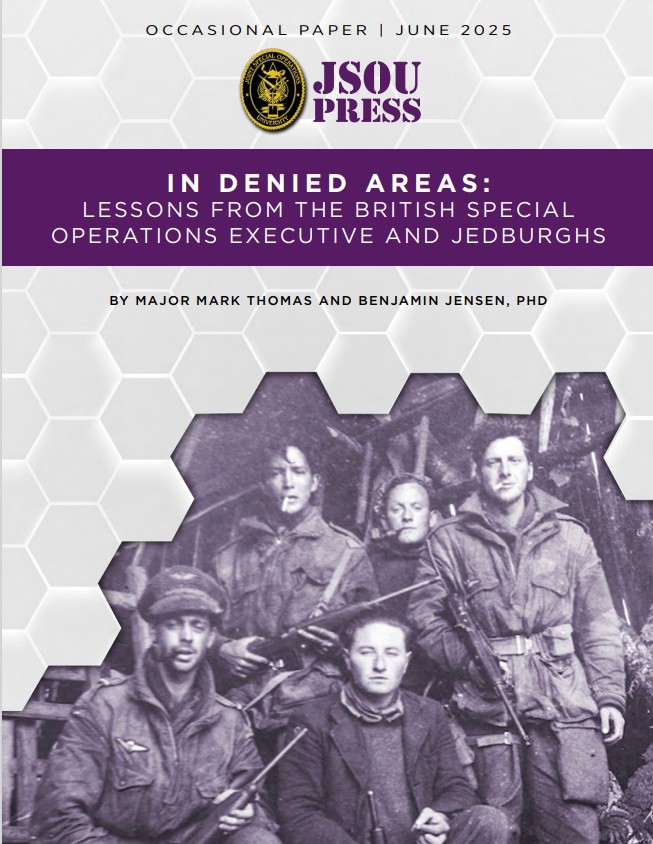
“Surprise, kill, and vanish,” motto of the World War II Jedburgh teams, captures the essence of how units successfully operated in a location comparable to a modern-day police state.
The latest JSOU Press occasional paper, In Denied Areas: Lessons from the British Special Operations Executive and Jedburghs by Major Mark Thomas and Benjamin Jensen, PhD, thoughtfully explores how through proper preparation of environment and communications security, the Jedburghs’ mission—infiltrating deep into Nazi-occupied France to support the allied Normandy invasion—offers important historical examples for battlefield survival still applicable today.
NEW! Occasional Paper PDF and audiobook now available!
Access as a web page by clicking here or on the image below.
|
Red Teaming: A Tool to Conduct Risk Assessment, Develop Critical Thinking, and Challenge SOF Strategic Planning Assumptions
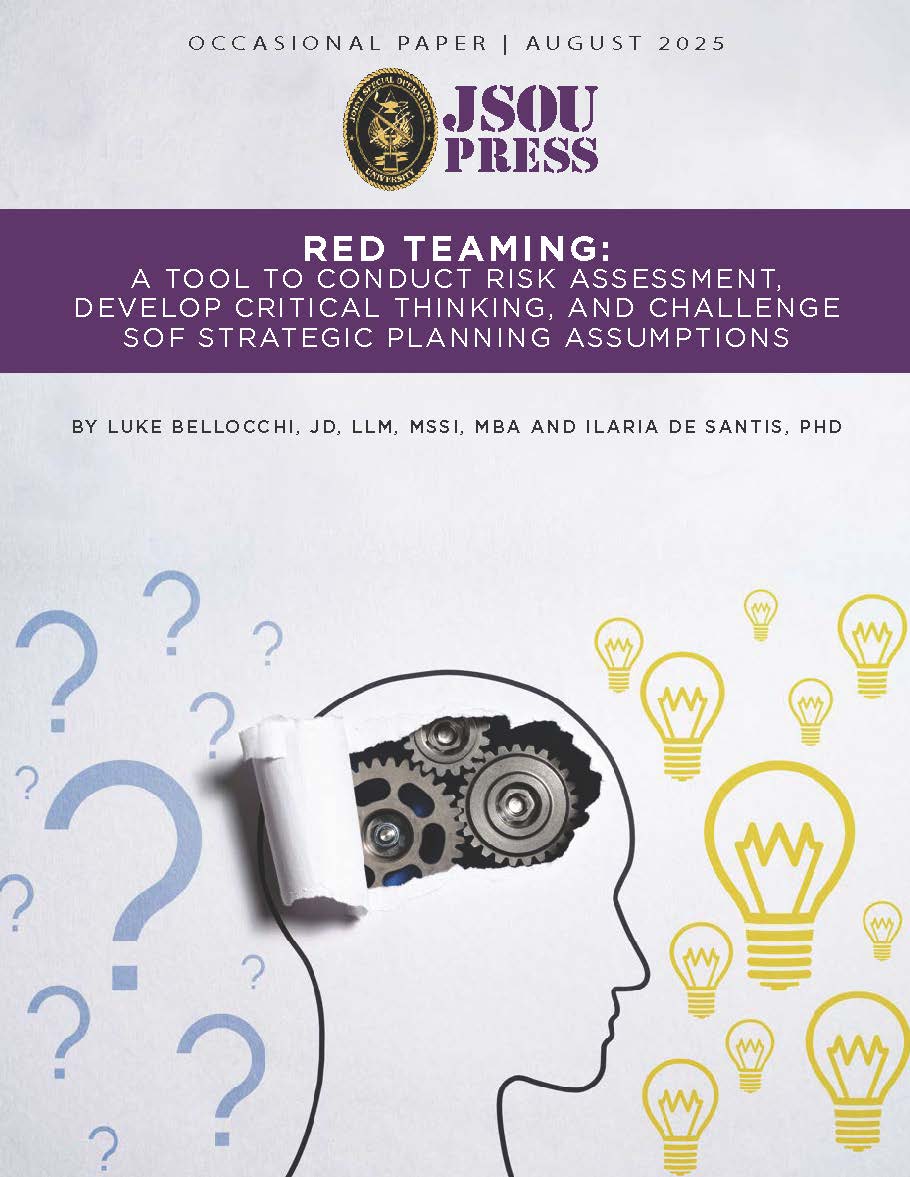
Risk assessment is touted as a critical aspect of strategy development. But in practice, it is often tacked on and examines risks inherent in an environment rather than what it is meant to examine: whether a strategy itself contains flaws. This new quick look examines the importance of critical thinking and risk assessment in red teaming and suggests an update to joint doctrine to ensure varied cognitive perspectives.
Access as a web page by clicking here or on the image below.
|
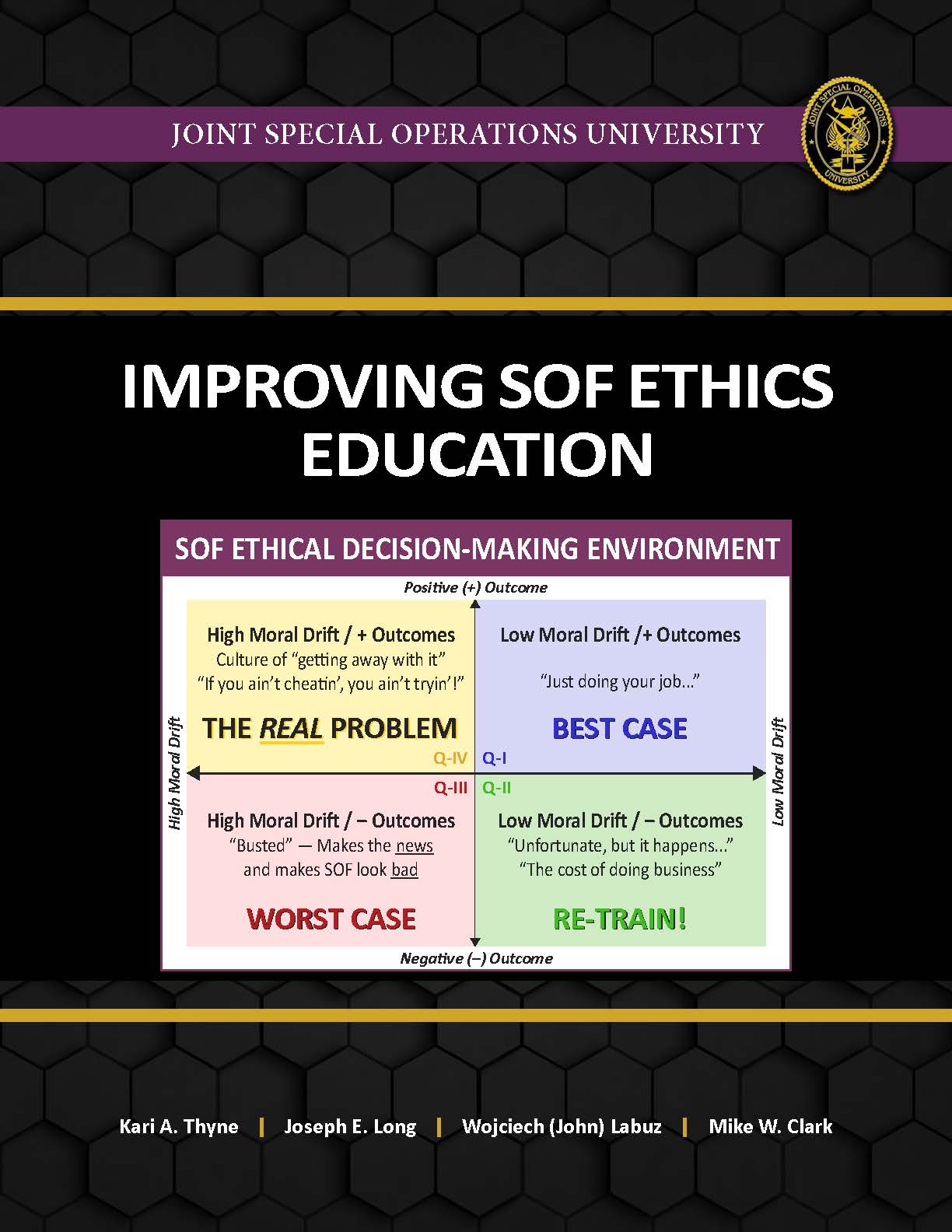
Improving SOF Ethics Education
The realities of human nature combined with the realities of the SOF operational environment create frequent opportunities for SOF professionals to become numb to moral drift and the ethical dilemmas that follow from a norm where “if you ain’t cheatin’, you ain’t tryin’!” takes on an institution-wide leadership problem for SOF professionals across the joint force and across the operational spectrum. This reality requires SOF leaders who recognize the reality that the SOF profession offers its own peculiar professional and ethical challenges and leaders who are professionally ready to lead in such highly complex ethical decision-making environments.
Competing for Advantage: The Chinese Communist Party, Statecraft, and Special Operations
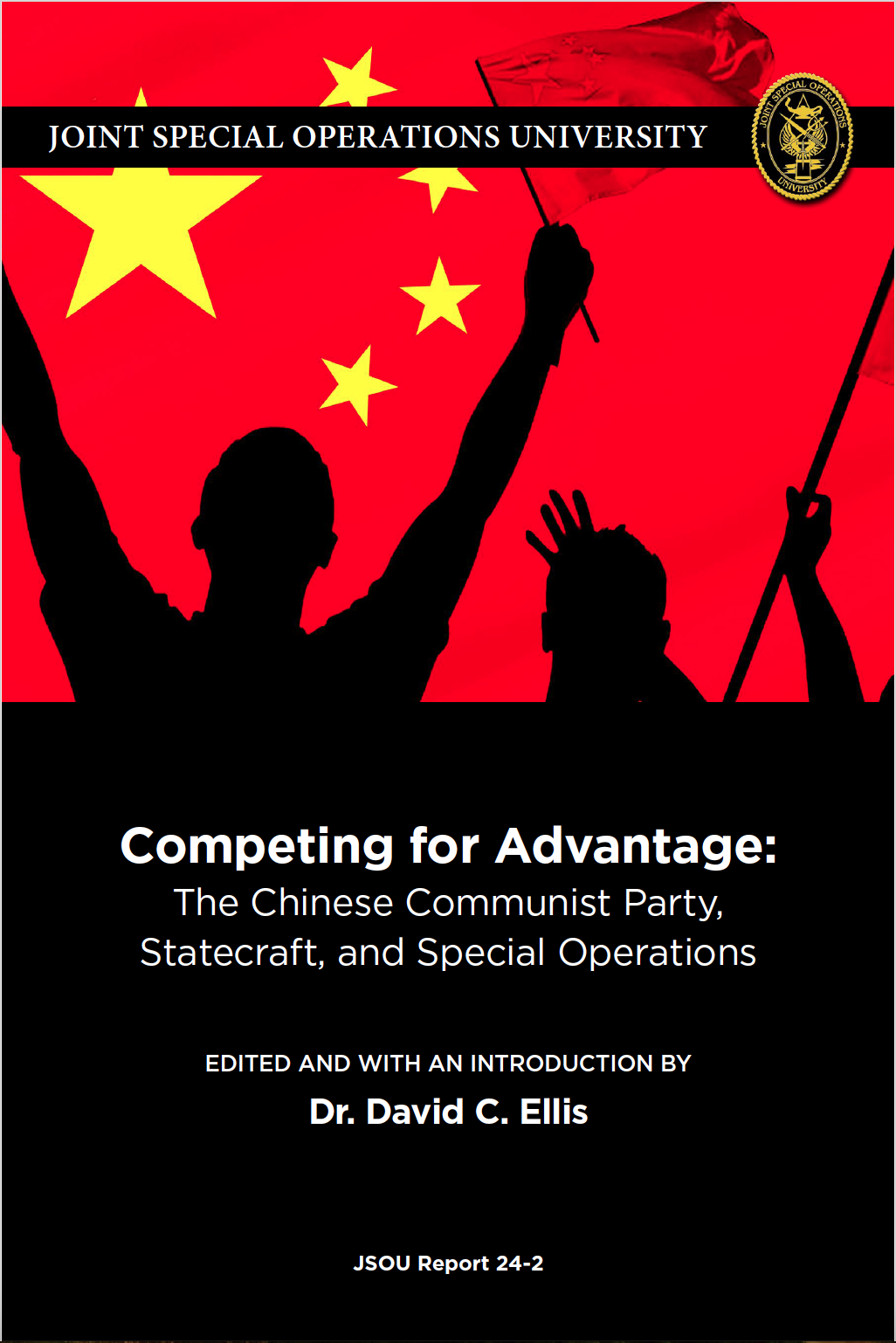
This edited volume highlights key challenges the Chinese Communist Party (CCP) faces in its rise and contextualizes the potential contributions of special operations to compete for advantage based on the CCP’s interests and vulnerabilities. Competing for advantage means accruing power and influence in such a way that the adversary’s plans cannot be realized. This volume focuses primarily on appreciating the CCP’s worldview, interests, and politics while promoting a strategic vision for the future—a future where SOF will need to reinterpret their value from providing a military effect to providing a political effect through military means.
The Fourth Age: The Future of Special Operations
This anthology of fictional stories helps us visualize a future era of special operations. Through their creative talents and subject matter knowledge, the authors realistically portray what is within the realm of possible. They draw upon lessons of the past while imagining the future.
SOF Quills for the Porcupine: Applying Lessons from Ukraine to Taiwan
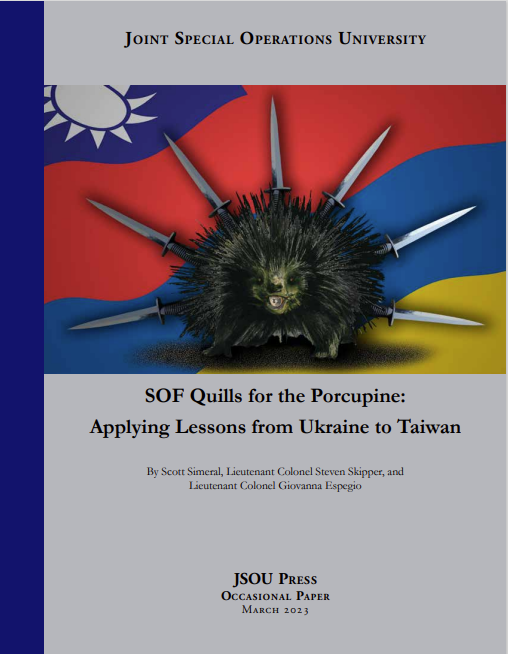
CIA Director William Burns assesses that Russia’s invasion of eastern Ukraine may inform China’s plan to gain control of Taiwan. Given the remarkable challenge Ukrainian resistance forces have presented Russia, Richard Clarke, General, U.S. Army, Ret. shares the desire of many U.S. officials for “Taiwan, just like Ukraine has been, to be an indigestible porcupine.” As of this writing, Ukraine has managed to avoid being metaphorically swallowed by Russia due to Ukraine’s conventional arsenal of deterrent “quills” comprised (in part) of ballistic missile defense, air defense, mine warfare, sea-denial fires, shore-denial fires, jamming, decoys, deception, civil defense, urban warfare, and life-essential infrastructure. Nevertheless, the U.S. and its allies have been reluctant to directly engage in open conflict with Russia or China due to the cataclysmic costs such a war might impose. Special Operations Forces (SOF) are uniquely suited for the delicate task of filling strategic deterrence gaps left by conventional capabilities.
The Fourth Age of SOF: The Use and Utility of Special Operations Forces in a New Age
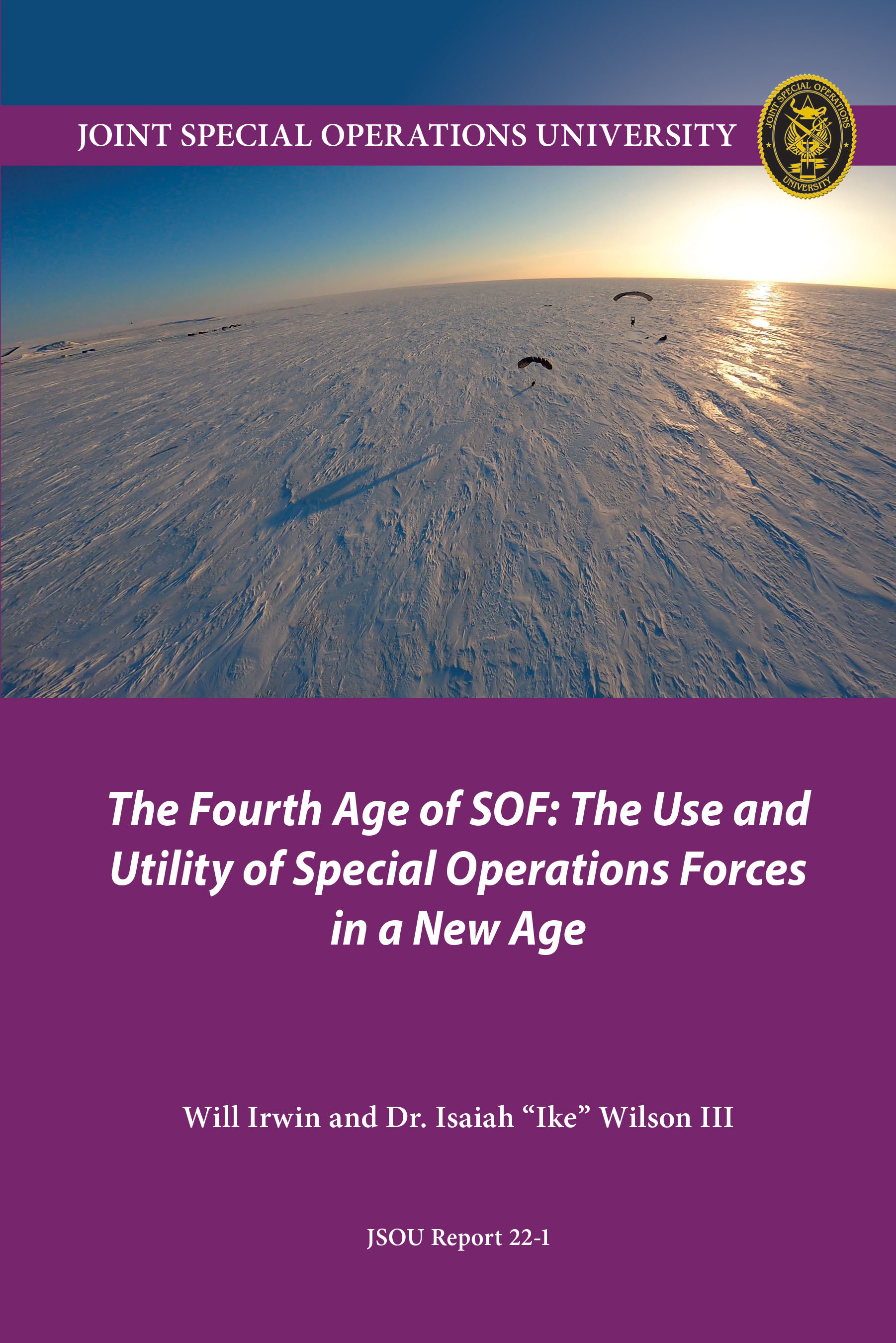
This sweeping monograph chronicles the development of modern Special Operations Forces (SOF) and insightfully describes their new challenges. The authors have compiled an excellent, concise description of SOF’s three earlier ages: 1941–1960, 1961–1979, and 1980–2020, setting the stage for projecting SOF’s Fourth-Age roles in the emerging era of strategic competition. The early years were not easy, but with determination and perseverance, the SOF community prevailed, and four decades of remarkable and unprecedented SOF achievements resulted. As they begin their Fourth Age, SOF will again be challenged.
ARTIFICIAL INTELLIGENCE (AI) POLICY
JSOU copyright and plagiarism guidance protects original and creative works, both published and unpublished, which have been fixed in tangible medium. It is unacceptable to submit generative AI as one’s own work. Anyone submitting a paper for JSOU Press publication consideration, including JSOU students, faculty, and staff, MUST disclose use of generative AI in their work, including text generation and image generation, and cite it properly. An AI tool (e.g., ChatGPT, Gemini, CoPilot) is not considered an author but rather a source and should be cited as such. Authors should verify AI output with credible sources and cite those sources, not the generative AI. Failure to properly attribute the use of generative AI is considered plagiarism.